So, I
build, use, see
the physics you can't see.

I build things that make abstract systems easier to see, test, and interact with. Most of my work sits around physics, XR, simulation, and machine learning—building tools for classrooms, experimenting with new interfaces, and working on problems where software meets the physical world.

Open to research collaborationsCornell University · Ithaca College
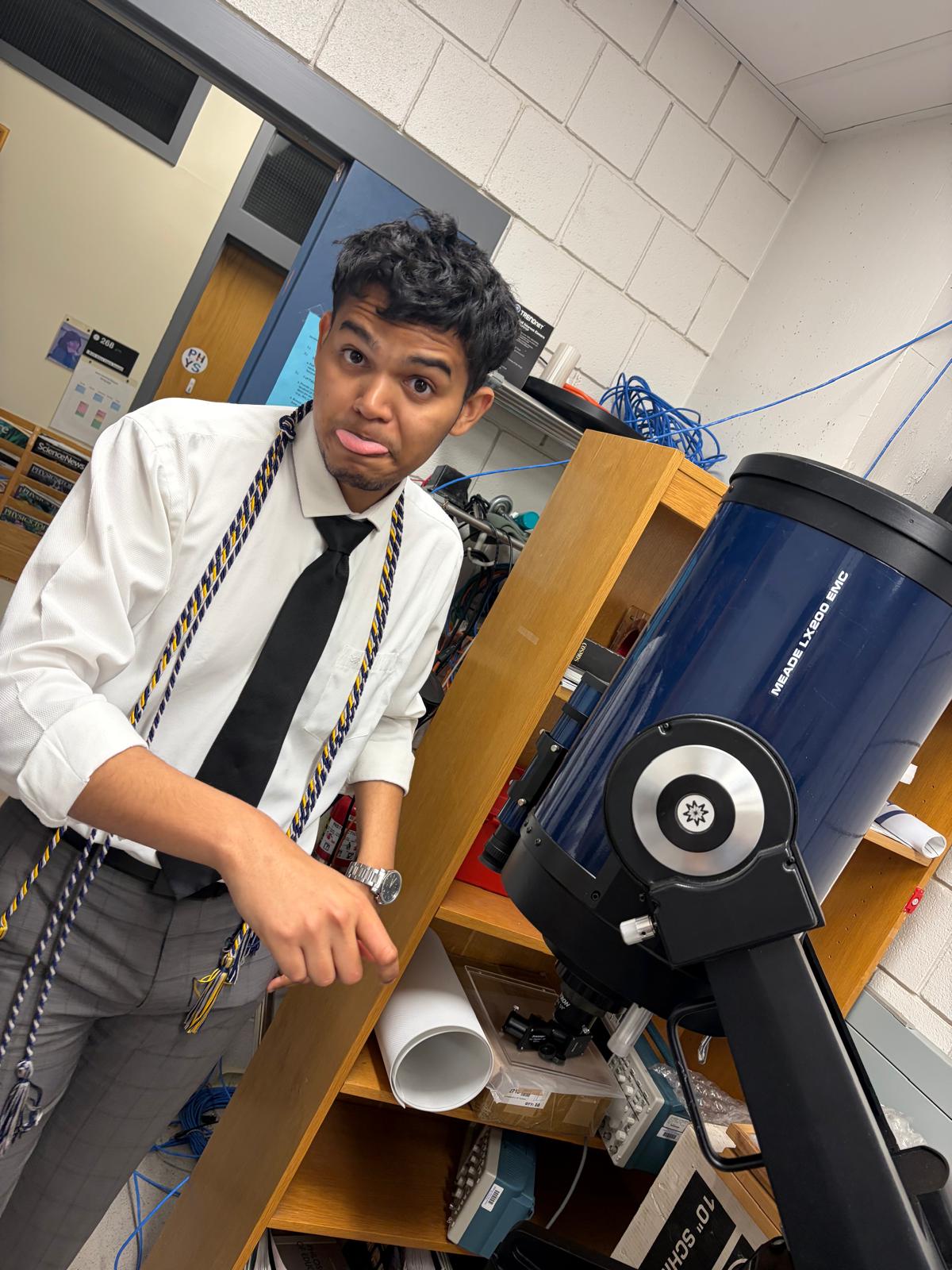
Suryash Malviya
1,000+students a year learn electromagnetism with simulations I built
#2220merged into Apple's MLX — complex matmul, ~19% faster on GPU
JCSCpeer-reviewed work on how dynamic programming should be taught
The main thing2024 — present
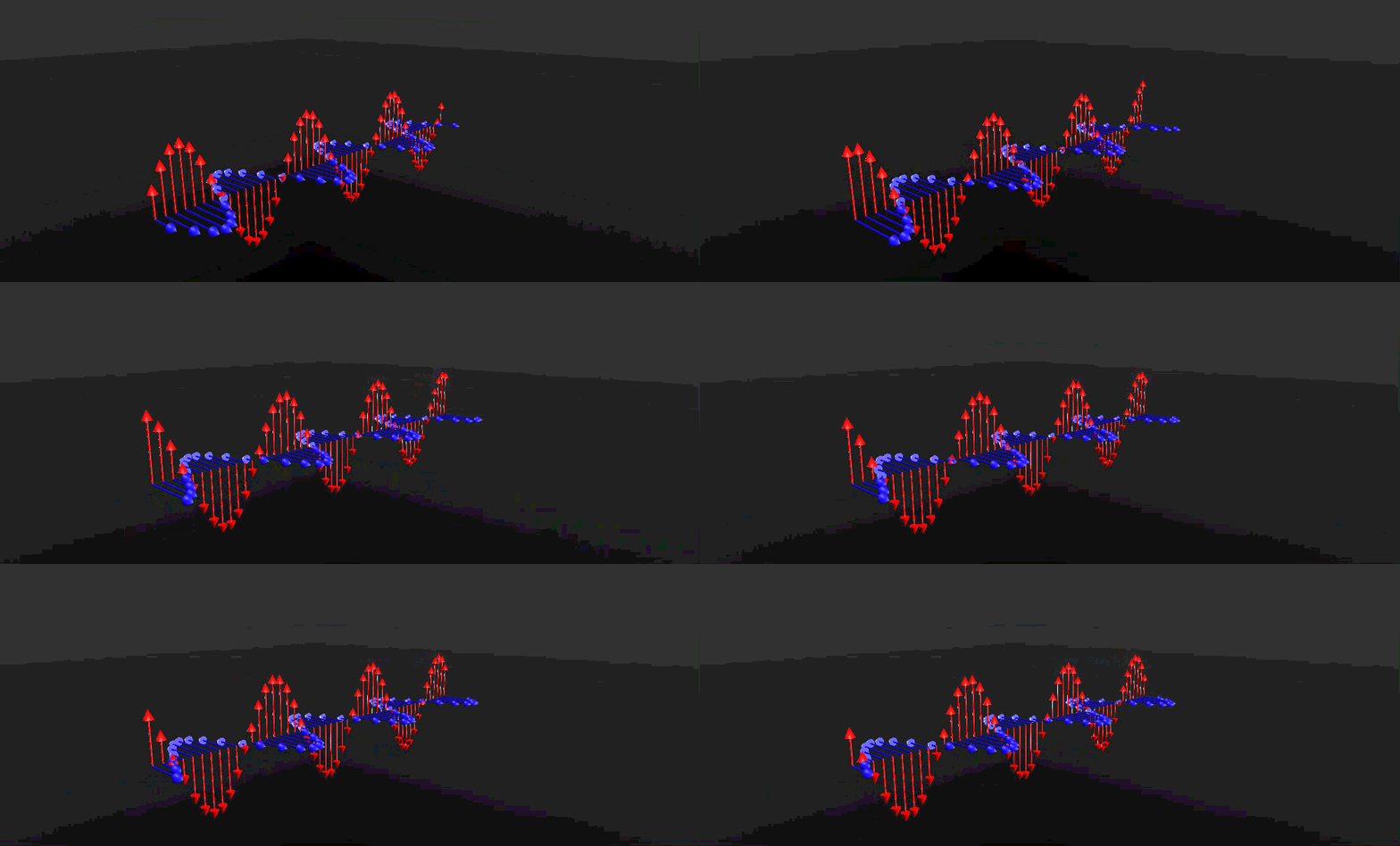
Unity E&M simulation — field lines around a current-carrying wire

Unity simulations for teaching electromagnetism

Intro E&M is where physics intuition goes to struggle. Fields are invisible, flux is abstract, and a textbook diagram can't show you what happens when you move the charge. So I built the fields — Ampère's law, Faraday's law, the Hall effect, Gaussian surfaces — on desktop, in the browser, and in a headset, all sharing one modular architecture I designed.

They're in real Cornell courses now, and the framework builds new modules faster than the first one took to prototype.

Run one in your browserAmpère's Law↗Faraday's Law↗Hall Effect↗Runs entirely on your device. Give it a moment to load.
Everything elseAll projects →
sim capture

A rocket that taught itself to land

A PPO agent trained under wind, sensor noise and mass variation until it stuck the landing 93% of the time — then a second policy that had to relearn the whole thing in true 3D, warm-started by imitating the first.

Reinforcement learningPPOPlayable
2025–26
benchmark plot

Three multiplications instead of four

A Karatsuba-style reformulation of complex matrix multiplication, benchmarked, reviewed by Apple's maintainers, and merged into MLX. ~17.7% faster on CPU, ~19.3% on GPU.

Open sourceMLXPerformance
2025
terminal / GPU trace

Top down or bottom up?

Two threads with two advisors: a peer-reviewed paper on how dynamic programming is best taught, and ongoing work on what large language models actually do to a GPU — the research that led to the MLX patch.

ResearchPublication
2024–
astro image

Teaching a campus telescope to take photographs

A research summer on CCD instrumentation and processing pipelines, aimed at one thing: making astrophotography something any student could do, not just the three people who knew the equipment.

OpticsInstrumentationPress
2023
makerspace photo

Parts that survive a live demo

Superconductor puck components for the World Science Festival, a 2012 MakerBot brought back to life on Klipper, and the day job keeping 4,500 makerspace users a year unstuck.

Fusion 360FirmwareFabrication
ongoing

Curious what the whole thing looks like?

Every project is a node in one drifting map — drag it around, click into anything. It's the old homepage, kept where it belongs: as a reward rather than a toll gate.

Open the map →